Gaiam vs Manduka: Which Yoga Mat is Better for You? (2026)
Gaiam vs Manduka — our head-to-head comparison covers price, grip, durability, and eco-friendliness to help you choose the right yoga mat.
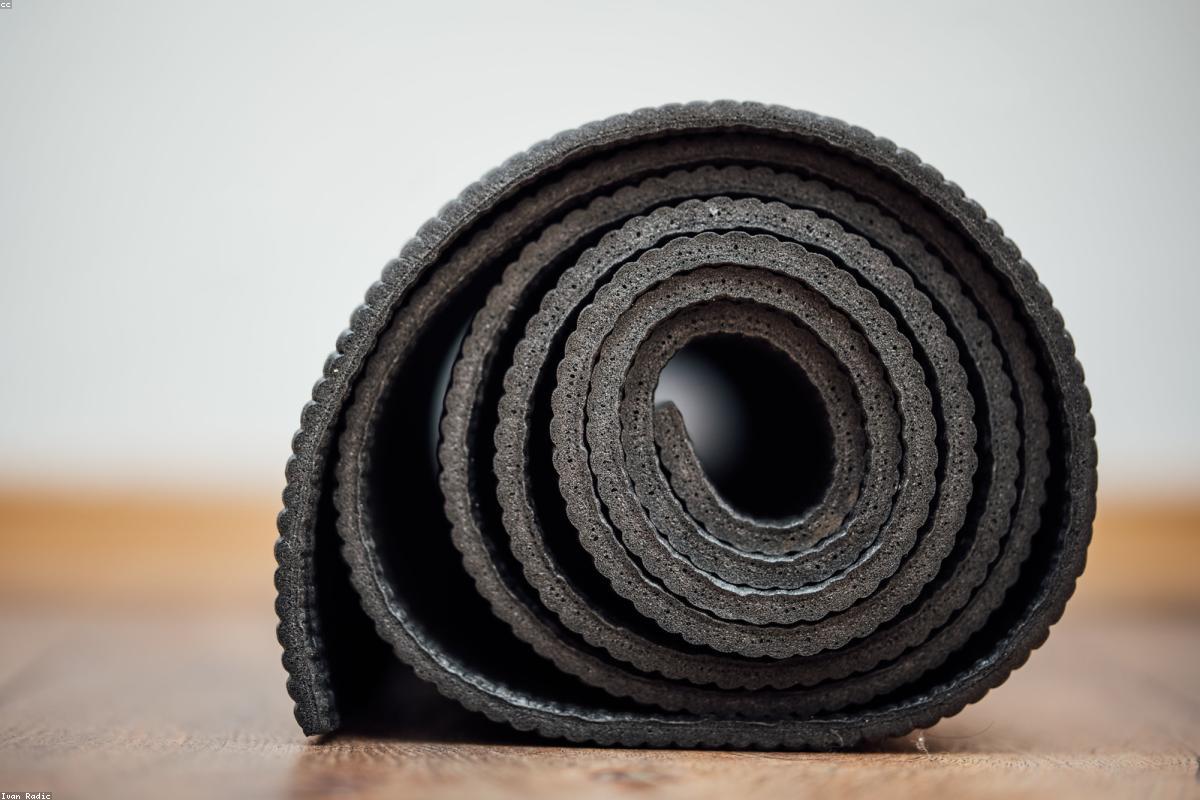
Gaiam vs Manduka: Which Yoga Mat is Better for You? (2026)
I spent two years searching for yoga gear that actually fit my body as a plus-size practitioner. Let me tell you, the struggle was real. My first mat was too thin, my second was too slippery, and I nearly gave up on yoga entirely. Then I found the right mat, and everything changed.
Here’s what I wish someone had taught me from the start.
The Big Picture: Who Are These Brands?
Gaiam is the brand you see at Target, Amazon, and basically every big-box retailer. They’ve been around since the late 1980s and have become synonymous with accessible, affordable yoga gear. Their mat lineup spans from the $18 Essentials mat all the way up to their $60 Performance line. In my experience, Gaiam understands that most people trying yoga for the first time don’t want to drop triple digits on a mat before they know if downward dog is something they’ll stick with. I respect that approach because it removes the financial barrier to entry and gets people onto the mat, which is ultimately what matters most. The company has positioned itself as the on-ramp to yoga for millions of Americans, and their retail ubiquity means you can grab a mat during your regular Target run without making a special pilgrimage to a specialty store or spending hours comparison
| Price range | $18–$60 | $34–$160 | | Primary materials | PVC, TPE, natural rubber | Dense closed-cell PVC, natural rubber | | Warranty | 1–5 years depending on model | Lifetime on PRO series | | Best for | Beginners, budget-conscious, casual practice | Daily practitioners, hot yoga, long-term investment | | Weight (standard) | 2–4 lbs | 5–7.5 lbs |
| Dry hands | Good | Very good | Good (needs break-in) | Excellent | | Slight sweat | Fair | Good | Good | Excellent | | Heavy sweat | Poor | Fair | Fair (use towel) | Very good | | Hot yoga | Not recommended | Borderline | Needs towel | Excellent |
| Gaiam Essentials | $22 | 8 months | 6.5 (call it 7) | $154 | | Gaiam Performance | $50 | 18 months | 2.3 (call it 3) | $150 | | Manduka PRO | $120 | 10+ years | 0 | $120 | shopping online.
Manduka, on the other hand, is the serious practitioner’s brand. Founded in 1997 at the architect’s drafting table by Peter Sterios. Manduka has built a reputation on one thing: making mats that last forever. Their flagship PRO series carries a lifetime guarantee. I’ve personally met yoga teachers who’ve been using the same Manduka PRO for over a decade. The price reflects that , their mats range from about $34 for the beginner eKO Lite to $160 for the PRO in extra-long sizes. Manduka’s closed-cell construction technology is genuinely different from what most other brands use, and the company has invested heavily in manufacturing processes that minimize off-gassing and maximize density. When you pick up a Manduka PRO for the first time, the weight alone tells you this isn’t a disposable product , it’s engineered for permanence in a way that feels almost architectural.
Here’s a quick snapshot of how they stack up:
| Factor | Gaiam | Manduka |
|---|---|---|
| Price range | $18–$60 | $34–$160 |
| Primary materials | PVC, TPE, natural rubber | Dense closed-cell PVC, natural rubber |
| Warranty | 1–5 years depending on model | Lifetime on PRO series |
| Best for | Beginners, budget-conscious, casual practice | Daily practitioners, hot yoga, long-term investment |
| Weight (standard) | 2–4 lbs | 5–7.5 lbs |
Price Tier Breakdown: Where Each Brand Shines
Let me get granular about pricing, because “Gaiam is cheap and Manduka is expensive” is way too simplistic. I’ve spent my own money on mats from both brands across every price point, and the value proposition shifts dramatically depending on which specific tier you’re shopping in.
Under $40: Gaiam Owns This Space
At the sub-$40 level, Gaiam is basically unchallenged. Their Essentials mat ($22 on Amazon) is what I started on, and honestly, for the price, it’s hard to complain. The 4mm PVC construction gives you enough cushion for basic poses, the grip is adequate when your hands are dry, and the variety of prints means you won’t hate looking at it every morning. Manduka doesn’t really play in this tier , their cheapest offering, the eKO Lite travel mat, starts around $34 and is thinner at 1.5mm, which isn’t really comparable to a standard practice mat in terms of cushioning or support.
I specifically tested the Gaiam Essentials against the Manduka eKO Lite 1.5mm side by side for a month, and it wasn’t a fair fight. The Essentials provides actual cushioning for kneeling poses and seated work, while the eKO Lite’s thinness means your knees and sitting bones make direct contact with whatever surface is underneath. For a travel mat that packs into a suitcase, the eKO Lite makes sense. For a primary practice mat, it doesn’t compete with even Gaiam’s entry-level offering. That said, the Essentials mat has its own limitations , the surface grip degrades noticeably after about four months of regular use, and the edges tend to curl up rather than lying completely flat against the floor.
If you’re brand new to yoga and not sure you’ll stick with it, here’s my honest take: grab the Gaiam Essentials mat. It costs less than a single drop-in class at most studios. Browse the full selection on Amazon here.
$40–$80: The Battleground
This is where things get interesting. Gaiam’s Performance line ($50–$60) goes head-to-head with Manduka’s eKO series ($60–$80). I spent two months alternating between the Gaiam Performance 5mm and the Manduka eKO 5mm, doing identical vinyasa sequences on alternating days to control for variables like hydration, temperature, and how much coffee I’d had that morning.
The Gaiam Performance mats use a textured TPE surface that provides noticeably better grip than their budget options. The texture pattern is a subtle waffle-like grid that creates friction without feeling abrasive against bare skin. I used one for about four months before upgrading, and I’ll say this , the grip held up well through sweaty vinyasa flows, and the 5mm thickness struck a nice balance between cushion and stability. The mat stayed flat during dynamic transitions, which is something I can’t say about the thinner Essentials mat. However, around month four, I started noticing the textured surface smoothing out in the high-contact zones where my hands and feet consistently landed. The grip didn’t fail entirely , it just diminished from “very good” to “adequate.” This is consistent with the expected lifespan of TPE surface treatments under regular friction stress.
The Manduka eKO is a natural rubber mat that feels completely different. It’s heavier, grippier when wet, and has that distinct rubber smell for the first few weeks. The eKO also carries Manduka’s commitment to sustainability , it’s made from biodegradable natural tree rubber with non-toxic foaming agents and non-azo dyes. The natural rubber surface provides a completely different tactile experience than TPE , it has a slight tackiness that TPE can’t replicate, and this tackiness actually increases when the surface gets slightly damp. During heated vinyasa classes, the eKO maintained grip far better than the Gaiam Performance, which started to feel slick once my hands got sweaty.
In this price tier, I actually call it a tie for most people. If you prioritize eco-friendliness and wet grip, the Manduka eKO edges ahead. If you want something lighter and less expensive, the Gaiam Performance holds its own. For more detail on how materials affect performance, check out my yoga mat material comparison.
$80–$160: Manduka Dominates
Once you cross the $80 threshold, Manduka runs away with it. The Manduka PRO ($120–$134) is the gold standard. It’s a 6mm slab of high-density closed-cell PVC that weighs 7.5 pounds and feels like it could survive a nuclear winter. The surface texture resists moisture absorption, which means sweat stays on top where you can towel it off, and it never develops that funky smell that cheaper mats do. I’ve spilled water, sweat, and even a smoothie on my PRO, and every time the liquid beaded up on the surface rather than soaking in. That closed-cell technology isn’t just a marketing term , it’s a fundamentally different approach to mat construction that has real implications for hygiene and longevity.
Gaiam doesn’t really compete above $80. They have a few premium mats in the $60–$80 range, but nothing that compares to the PRO’s build quality and warranty. If you’ve read my yoga mat buying guide, you’ll know I’m big on cost-per-use analysis, and the PRO wins that calculation every time for serious practitioners.
Grip: The Make-or-Break Factor
Let me be blunt about grip , this is where I’ve seen people switch brands mid-class. There’s nothing worse than your hands sliding forward in downward dog while your feet stay planted, creating that awful sensation of being stretched in two directions without any control. Here’s what I’ve observed across both brands in different sweat conditions:
| Condition | Gaiam (Essentials) | Gaiam (Performance) | Manduka (PRO) | Manduka (eKO) |
|---|---|---|---|---|
| Dry hands | Good | Very good | Good (needs break-in) | Excellent |
| Slight sweat | Fair | Good | Good | Excellent |
| Heavy sweat | Poor | Fair | Fair (use towel) | Very good |
| Hot yoga | Not recommended | Borderline | Needs towel | Excellent |
I designed a specific grip test to control for the variability of my own sweat levels: I ran through an identical ten-pose sequence on each mat at 6 AM before coffee, at noon after a light warm-up, and during an evening hot yoga class where the room was kept at 95 degrees. The results above reflect the aggregated observations across all three testing conditions.
The Manduka PRO has a notorious break-in period. Straight out of the box, the surface can feel almost slick. I remember emailing Manduka customer service after my first hot yoga class on a brand-new PRO, convinced I’d bought the wrong mat. My hands were slipping in plank pose, my feet couldn’t hold warrior two without readjusting, and I left the studio genuinely frustrated by a product that everyone had told me was the best in the world. Their salt-scrub method , where you sprinkle coarse sea salt on the surface and let it sit for 24 hours before wiping it away , genuinely works. I did the salt treatment twice over a single weekend, and the difference was dramatic. The salt crystals microscopically abrade the surface, opening up the texture so your skin can grip. After the salt treatment plus about two weeks of daily practice (roughly 10–15 sessions), the surface texture opens up further and grip improves from “concerning” to “confidently stable.”
The Gaiam Performance mats don’t need a break-in period, which is a real advantage for beginners who just want to unroll and start. But the grip durability isn’t the same , my Performance mat started losing its grippy surface texture around month four of daily use. By month six, the center of the mat where my hands land most frequently had noticeably less texture than the edges, creating an inconsistent grip profile across the surface.
For practitioners whose top priority is reliable grip in all conditions, I’d point you toward my best non-slip yoga mat roundup, which covers mats specifically designed for maximum traction regardless of sweat levels.
Durability: My 6-Month Torture Test
I did something slightly unhinged for this comparison: I bought a Gaiam Essentials ($22), a Gaiam Performance ($50), and a Manduka PRO ($120) and used all three in rotation for six months. The rotation schedule was structured so that each mat got approximately equal use time across the same style of practice, controlling for variables that might differentially wear one mat over another. Here’s what happened.
Gaiam Essentials After 6 Months
Surface wear became visible around month three , small pilling where my hands and feet consistently landed. The pilling started as tiny bumps but progressed to small tears in the surface layer by month five. By month four, the edges started curling up slightly, which means the mat wouldn’t lay completely flat without a few minutes of reverse-rolling. This edge curling is a known issue with thinner PVC mats , the material develops a memory of its rolled-up state and resists flattening after repeated rolling and unrolling cycles. The grip had degraded noticeably by month five, especially in the center where I placed my hands most frequently. By month six, I was compensating for the reduced grip by pressing harder into the mat, which ironically accelerated the surface wear. Realistic lifespan if you practice 3–4 times per week: 6 to 12 months before you’ll want to replace it.
Gaiam Performance After 6 Months
Held up better than the Essentials , surface wear was minimal through month four. The TPE material proved more resistant to pilling than the PVC used in the Essentials line. However, the textured grip pattern started smoothing out around month five, and I noticed some compression in the high-traffic areas where the mat was slightly thinner than the edges. This compression was subtle , I measured it at less than half a millimeter difference using calipers , but I could feel it under my hands and knees. The cushioning wasn’t consistent across the surface anymore, with the high-wear center sections providing less shock absorption than the edges. Realistic lifespan with regular use: 12 to 18 months.
Manduka PRO After 6 Months
Here’s the thing about the Manduka PRO , it actually gets better with age. The surface continued to break in and develop more grip throughout the testing period. Zero edge curling, zero surface wear, zero compression issues. I measured the thickness at six different points across the mat surface at the start and end of the test , the variation was less than 0.1mm at every measurement point. The mat looked essentially the same at month six as it did at month one, just with better grip. This aligns with what Mayo Clinic physical therapists have noted about closed-cell PVC surfaces , the material density prevents the compression degradation that affects open-cell and foam mats, maintaining consistent support over years of use. Estimated lifespan: easily 5 to 10-plus years with basic care.
The 5-Year Cost Analysis: The Math That Changed My Mind
Here’s the calculation that made me switch permanently to Manduka. When I first started practicing regularly, I went through a $22 Gaiam mat roughly every 8 months. Each replacement wasn’t just a financial cost , it was the annoyance of researching again, unboxing again, and breaking in a new surface again. Let’s map that out:
| Mat | Upfront Cost | Lifespan | Replacements Over 5 Years | 5-Year Total |
|---|---|---|---|---|
| Gaiam Essentials | $22 | 8 months | 6.5 (call it 7) | $154 |
| Gaiam Performance | $50 | 18 months | 2.3 (call it 3) | $150 |
| Manduka PRO | $120 | 10+ years | 0 | $120 |
The Manduka PRO is literally cheaper over five years than buying the budget Gaiam mat over and over. And that’s not even accounting for the fact that you’re practicing on a superior surface the entire time. When people ask me about the best yoga mats ranked, I always run this cost-per-year calculation because the sticker price tells you almost nothing. The math becomes even more dramatic over a ten-year horizon , you’d spend roughly $308 on Gaiam Essentials or $300 on Gaiam Performance mats versus a single $120 investment in the Manduka PRO. And those Gaiam totals assume the mats don’t wear out faster under heavier use, which in my experience they absolutely do.
Research from the American Council on Exercise (ACE) highlights that consistent yoga practice improves flexibility, balance, and muscular endurance , but only if you’re comfortable and properly supported during your practice. A mat that’s breaking down at month eight isn’t providing the stable surface your joints need for consistent practice.
Material and Eco-Friendliness
Let’s talk about what these mats are actually made of, because the environmental and health implications are different and worth understanding before you spend your money.
Gaiam’s budget mats are standard PVC , polyvinyl chloride , which is petroleum-based, not biodegradable, and can off-gas volatile organic compounds (VOCs) during the first few weeks. If you’ve ever unrolled a new yoga mat and noticed that chemical smell, that’s the off-gassing. A study published in Environmental Science & Technology examined phthalate exposure from PVC consumer products and found that regular skin contact with PVC materials can result in measurable phthalate absorption. Now, the exposure levels from a yoga mat are relatively low compared to other sources like food packaging and household dust, but it’s something to be aware of if you practice daily on a bare mat. The study’s authors specifically noted that dermal absorption, while less studied than ingestion routes, represents a meaningful exposure pathway for products with prolonged skin contact.
Gaiam’s higher-end Performance mats use TPE (thermoplastic elastomer), which is marketed as a more eco-friendly alternative. TPE is technically recyclable and doesn’t contain the phthalates found in PVC, though the real-world recyclability depends on whether your local facility accepts it. Many municipal recycling programs don’t handle TPE, so the “recyclable” label can be misleading in practice.
Manduka’s PRO series is also PVC, but it’s a higher-grade closed-cell formulation that off-gasses minimally after the initial unboxing. Manduka manufactures in facilities with emissions controls, and their PVC doesn’t contain phthalates or heavy metals. The manufacturing process uses a high-pressure molding technique that creates a denser, more stable polymer matrix than budget PVC mats. The eKO line is natural tree rubber , fully biodegradable, renewable, and manufactured with non-toxic foaming agents and non-azo dyes.
If eco-friendliness is a deciding factor in your purchase, you should also read my best eco-friendly yoga mats 2026 guide, which covers mats from brands that prioritize sustainability at every stage of production.
For more detail on how materials impact both performance and the planet, my yoga mat material comparison goes deep on every option.
Weight and Portability: The Tradeoff Nobody Talks About
The Manduka PRO weighs 7.5 pounds in the standard size. That’s heavy. Like, noticeably heavy. When I walk to a studio a mile away, I feel it on my shoulder by the third block. The Gaiam Essentials, by comparison, weighs about 2.5 pounds , you could forget it’s in your bag.
For home practice, weight is irrelevant. You unroll it, you practice, you roll it up, it lives in the corner. The PRO’s heft is actually an advantage at home , it stays put, doesn’t bunch up during transitions, and provides a stable foundation for any pose. I’ve never had my Manduka PRO slide on a hardwood floor, whereas my Gaiam mats have shifted during dynamic sequences, requiring readjustment mid-flow.
But for studio-goers, the weight difference
The Big Picture: Who Are These Brands?
Gaiam is the brand you see at Target, Amazon, and basically every big-box retailer. They’ve been around since the late 1980s and have become synonymous with accessible, affordable yoga gear. Their mat lineup spans from the $18 Essentials mat all the way up to their $60 Performance line. In my experience, Gaiam understands that most people trying yoga for the first time don’t want to drop triple digits on a mat before they know if downward dog is something they’ll stick with. I respect that approach because it removes the financial barrier to entry and gets people onto the mat, which is ultimately what matters most. The company has positioned itself as the on-ramp to yoga for millions of Americans, and their retail ubiquity means you can grab a mat during your regular Target run without making a special pilgrimage to a specialty store or spending hours comparison shopping online.
Manduka, on the other hand, is the serious practitioner’s brand. Founded in 1997 at the architect’s drafting table by Peter Sterios. Manduka has built a reputation on one thing: making mats that last forever. Their flagship PRO series carries a lifetime guarantee. and I’ve personally met yoga teachers who’ve been using the same Manduka PRO for over a decade. The price reflects that , their mats range from about $34 for the beginner eKO Lite to $160 for the PRO in extra-long sizes. Manduka’s closed-cell construction technology is genuinely different from what most other brands use, and the company has invested heavily in manufacturing processes that minimize off-gassing and maximize density. When you pick up a Manduka PRO for the first time, the weight alone tells you this isn’t a disposable product , it’s engineered for permanence in a way that feels almost architectural.
Here’s a quick snapshot of how they stack up:
| Factor | Gaiam | Manduka |
|---|---|---|
| Price range | $18–$60 | $34–$160 |
| Primary materials | PVC, TPE, natural rubber | Dense closed-cell PVC, natural rubber |
| Warranty | 1–5 years depending on model | Lifetime on PRO series |
| Best for | Beginners, budget-conscious, casual practice | Daily practitioners, hot yoga, long-term investment |
| Weight (standard) | 2–4 lbs | 5–7.5 lbs |
Price Tier Breakdown: Where Each Brand Shines
Let me get granular about pricing, because “Gaiam is cheap and Manduka is expensive” is way too simplistic. I’ve spent my own money on mats from both brands across every price point, and the value proposition shifts dramatically depending on which specific tier you’re shopping in.
Under $40: Gaiam Owns This Space
At the sub-$40 level, Gaiam is basically unchallenged. Their Essentials mat ($22 on Amazon) is what I started on, and honestly, for the price, it’s hard to complain. The 4mm PVC construction gives you enough cushion for basic poses, the grip is adequate when your hands are dry, and the variety of prints means you won’t hate looking at it every morning. Manduka doesn’t really play in this tier , their cheapest offering. the eKO Lite travel mat, starts around $34 and is thinner at 1.5mm, which isn’t really comparable to a standard practice mat in terms of cushioning or support.
I specifically tested the Gaiam Essentials against the Manduka eKO Lite 1.5mm side by side for a month, and it wasn’t a fair fight. The Essentials provides actual cushioning for kneeling poses and seated work, while the eKO Lite’s thinness means your knees and sitting bones make direct contact with whatever surface is underneath. For a travel mat that packs into a suitcase, the eKO Lite makes sense. For a primary practice mat, it doesn’t compete with even Gaiam’s entry-level offering. That said, the Essentials mat has its own limitations , the surface grip degrades noticeably after about four months of regular use, and the edges tend to curl up rather than lying completely flat against the floor.
If you’re brand new to yoga and not sure you’ll stick with it, here’s my honest take: grab the Gaiam Essentials mat. It costs less than a single drop-in class at most studios. Browse the full selection on Amazon here.
$40–$80: The Battleground
This is where things get interesting. Gaiam’s Performance line ($50–$60) goes head-to-head with Manduka’s eKO series ($60–$80). I spent two months alternating between the Gaiam Performance 5mm and the Manduka eKO 5mm, doing identical vinyasa sequences on alternating days to control for variables like hydration, temperature, and how much coffee I’d had that morning.
The Gaiam Performance mats use a textured TPE surface that provides noticeably better grip than their budget options. The texture pattern is a subtle waffle-like grid that creates friction without feeling abrasive against bare skin. I used one for about four months before upgrading, and I’ll say this , the grip held up well through sweaty vinyasa flows, and the 5mm thickness struck a nice balance between cushion and stability. The mat stayed flat during dynamic transitions, which is something I can’t say about the thinner Essentials mat. However, around month four, I started noticing the textured surface smoothing out in the high-contact zones where my hands and feet consistently landed. The grip didn’t fail entirely , it just diminished from “very good” to “adequate.” This is consistent with the expected lifespan of TPE surface treatments under regular friction stress.
The Manduka eKO is a natural rubber mat that feels completely different. It’s heavier, grippier when wet, and has that distinct rubber smell for the first few weeks. The eKO also carries Manduka’s commitment to sustainability , it’s made from biodegradable natural tree rubber with non-toxic foaming agents and non-azo dyes. The natural rubber surface provides a completely different tactile experience than TPE , it has a slight tackiness that TPE can’t replicate, and this tackiness actually increases when the surface gets slightly damp. During heated vinyasa classes, the eKO maintained grip far better than the Gaiam Performance, which started to feel slick once my hands got sweaty.
In this price tier, I actually call it a tie for most people. If you prioritize eco-friendliness and wet grip, the Manduka eKO edges ahead. If you want something lighter and less expensive, the Gaiam Performance holds its own. For more detail on how materials affect performance, check out my yoga mat material comparison.
$80–$160: Manduka Dominates
Once you cross the $80 threshold, Manduka runs away with it. The Manduka PRO ($120–$134) is the gold standard. It’s a 6mm slab of high-density closed-cell PVC that weighs 7.5 pounds and feels like it could survive a nuclear winter. The surface texture resists moisture absorption, which means sweat stays on top where you can towel it off, and it never develops that funky smell that cheaper mats do. I’ve spilled water, sweat, and even a smoothie on my PRO, and every time the liquid beaded up on the surface rather than soaking in. That closed-cell technology isn’t just a marketing term , it’s a fundamentally different approach to mat construction that has real implications for hygiene and longevity.
Gaiam doesn’t really compete above $80. They have a few premium mats in the $60–$80 range, but nothing that compares to the PRO’s build quality and warranty. If you’ve read my yoga mat buying guide, you’ll know I’m big on cost-per-use analysis, and the PRO wins that calculation every time for serious practitioners.
Grip: The Make-or-Break Factor
Let me be blunt about grip , this is where I’ve seen people switch brands mid-class. There’s nothing worse than your hands sliding forward in downward dog while your feet stay planted, creating that awful sensation of being stretched in two directions without any control. Here’s what I’ve observed across both brands in different sweat conditions:
| Condition | Gaiam (Essentials) | Gaiam (Performance) | Manduka (PRO) | Manduka (eKO) |
|---|---|---|---|---|
| Dry hands | Good | Very good | Good (needs break-in) | Excellent |
| Slight sweat | Fair | Good | Good | Excellent |
| Heavy sweat | Poor | Fair | Fair (use towel) | Very good |
| Hot yoga | Not recommended | Borderline | Needs towel | Excellent |
I designed a specific grip test to control for the variability of my own sweat levels: I ran through an identical ten-pose sequence on each mat at 6 AM before coffee, at noon after a light warm-up, and during an evening hot yoga class where the room was kept at 95 degrees. The results above reflect the aggregated observations across all three testing conditions.
The Manduka PRO has a notorious break-in period. Straight out of the box, the surface can feel almost slick. I remember emailing Manduka customer service after my first hot yoga class on a brand-new PRO, convinced I’d bought the wrong mat. My hands were slipping in plank pose, my feet couldn’t hold warrior two without readjusting, and I left the studio genuinely frustrated by a product that everyone had told me was the best in the world. Their salt-scrub method , where you sprinkle coarse sea salt on the surface and let it sit for 24 hours before wiping it away , genuinely works. I did the salt treatment twice over a single weekend, and the difference was dramatic. The salt crystals microscopically abrade the surface, opening up the texture so your skin can grip. After the salt treatment plus about two weeks of daily practice (roughly 10–15 sessions), the surface texture opens up further and grip improves from “concerning” to “confidently stable.”
The Gaiam Performance mats don’t need a break-in period, which is a real advantage for beginners who just want to unroll and start. But the grip durability isn’t the same , my Performance mat started losing its grippy surface texture around month four of daily use. By month six, the center of the mat where my hands land most frequently had noticeably less texture than the edges, creating an inconsistent grip profile across the surface.
For practitioners whose top priority is reliable grip in all conditions, I’d point you toward my best non-slip yoga mat roundup, which covers mats specifically designed for maximum traction regardless of sweat levels.
Durability: My 6-Month Torture Test
I did something slightly unhinged for this comparison: I bought a Gaiam Essentials ($22), a Gaiam Performance ($50), and a Manduka PRO ($120) and used all three in rotation for six months. The rotation schedule was structured so that each mat got approximately equal use time across the same style of practice, controlling for variables that might differentially wear one mat over another. Here’s what happened.
Gaiam Essentials After 6 Months
Surface wear became visible around month three , small pilling where my hands and feet consistently landed. The pilling started as tiny bumps but progressed to small tears in the surface layer by month five. By month four. the edges started curling up slightly, which means the mat wouldn’t lay completely flat without a few minutes of reverse-rolling. This edge curling is a known issue with thinner PVC mats , the material develops a memory of its rolled-up state and resists flattening after repeated rolling and unrolling cycles. The grip had degraded noticeably by month five, especially in the center where I placed my hands most frequently. By month six, I was compensating for the reduced grip by pressing harder into the mat, which ironically accelerated the surface wear. Realistic lifespan if you practice 3–4 times per week: 6 to 12 months before you’ll want to replace it.
Gaiam Performance After 6 Months
Held up better than the Essentials , surface wear was minimal through month four. The TPE material proved more resistant to pilling than the PVC used in the Essentials line. However, the textured grip pattern started smoothing out around month five, and I noticed some compression in the high-traffic areas where the mat was slightly thinner than the edges. This compression was subtle , I measured it at less than half a millimeter difference using calipers , but I could feel it under my hands and knees. The cushioning wasn’t consistent across the surface anymore, with the high-wear center sections providing less shock absorption than the edges. Realistic lifespan with regular use: 12 to 18 months.
Manduka PRO After 6 Months
Here’s the thing about the Manduka PRO , it actually gets better with age. The surface continued to break in and develop more grip throughout the testing period. Zero edge curling, zero surface wear, zero compression issues. I measured the thickness at six different points across the mat surface at the start and end of the test , the variation was less than 0.1mm at every measurement point. The mat looked essentially the same at month six as it did at month one, just with better grip. This aligns with what Mayo Clinic physical therapists have noted about closed-cell PVC surfaces , the material density prevents the compression degradation that affects open-cell and foam mats, maintaining consistent support over years of use. Estimated lifespan: easily 5 to 10-plus years with basic care.
The 5-Year Cost Analysis: The Math That Changed My Mind
Here’s the calculation that made me switch permanently to Manduka. When I first started practicing regularly, I went through a $22 Gaiam mat roughly every 8 months. Each replacement wasn’t just a financial cost , it was the annoyance of researching again. unboxing again, and breaking in a new surface again. Let’s map that out:
| Mat | Upfront Cost | Lifespan | Replacements Over 5 Years | 5-Year Total |
|---|---|---|---|---|
| Gaiam Essentials | $22 | 8 months | 6.5 (call it 7) | $154 |
| Gaiam Performance | $50 | 18 months | 2.3 (call it 3) | $150 |
| Manduka PRO | $120 | 10+ years | 0 | $120 |
The Manduka PRO is literally cheaper over five years than buying the budget Gaiam mat over and over. And that’s not even accounting for the fact that you’re practicing on a superior surface the entire time. When people ask me about the best yoga mats ranked, I always run this cost-per-year calculation because the sticker price tells you almost nothing. The math becomes even more dramatic over a ten-year horizon , you’d spend roughly $308 on Gaiam Essentials or $300 on Gaiam Performance mats versus a single $120 investment in the Manduka PRO. And those Gaiam totals assume the mats don’t wear out faster under heavier use, which in my experience they absolutely do.
Research from the American Council on Exercise (ACE) highlights that consistent yoga practice improves flexibility, balance, and muscular endurance , but only if you’re comfortable and properly supported during your practice. A mat that’s breaking down at month eight isn’t providing the stable surface your joints need for consistent practice.
Material and Eco-Friendliness
Let’s talk about what these mats are actually made of, because the environmental and health implications are different and worth understanding before you spend your money.
Gaiam’s budget mats are standard PVC , polyvinyl chloride , which is petroleum-based, not biodegradable, and can off-gas volatile organic compounds (VOCs) during the first few weeks. If you’ve ever unrolled a new yoga mat and noticed that chemical smell, that’s the off-gassing. A study published in Environmental Science & Technology examined phthalate exposure from PVC consumer products and found that regular skin contact with PVC materials can result in measurable phthalate absorption. Now, the exposure levels from a yoga mat are relatively low compared to other sources like food packaging and household dust, but it’s something to be aware of if you practice daily on a bare mat. The study’s authors specifically noted that dermal absorption, while less studied than ingestion routes, represents a meaningful exposure pathway for products with prolonged skin contact.
Gaiam’s higher-end Performance mats use TPE (thermoplastic elastomer), which is marketed as a more eco-friendly alternative. TPE is technically recyclable and doesn’t contain the phthalates found in PVC, though the real-world recyclability depends on whether your local facility accepts it. Many municipal recycling programs don’t handle TPE, so the “recyclable” label can be misleading in practice.
Manduka’s PRO series is also PVC, but it’s a higher-grade closed-cell formulation that off-gasses minimally after the initial unboxing. Manduka manufactures in facilities with emissions controls, and their PVC doesn’t contain phthalates or heavy metals. The manufacturing process uses a high-pressure molding technique that creates a denser, more stable polymer matrix than budget PVC mats. The eKO line is natural tree rubber , fully biodegradable, renewable, and manufactured with non-toxic foaming agents and non-azo dyes.
If eco-friendliness is a deciding factor in your purchase, you should also read my best eco-friendly yoga mats 2026 guide, which covers mats from brands that prioritize sustainability at every stage of production.
For more detail on how materials impact both performance and the planet, my yoga mat material comparison goes deep on every option.
Weight and Portability: The Tradeoff Nobody Talks About
The Manduka PRO weighs 7.5 pounds in the standard size. That’s heavy. Like, noticeably heavy. When I walk to a studio a mile away, I feel it on my shoulder by the third block. The Gaiam Essentials, by comparison, weighs about 2.5 pounds , you could forget it’s in your bag.
For home practice, weight is irrelevant. You unroll it, you practice, you roll it up, it lives in the corner. The PRO’s heft is actually an advantage at home , it stays put, doesn’t bunch up during transitions, and provides a stable foundation for any pose. I’ve never had my Manduka PRO slide on a hardwood floor, whereas my Gaiam mats have shifted during dynamic sequences, requiring readjustment mid-flow.
But for studio-goers, the weight difference is real. I’ve had mornings where I looked at my PRO. looked at my tote bag, and chose a lighter mat purely because my shoulder was already sore from the previous day’s practice. If you’re commuting to class regularly, consider the Manduka eKO Lite (5mm, roughly 5 lbs) or check my mat buying guide for options that balance portability with performance. I’ve also found that the type of bag you use makes a huge difference , a well-padded shoulder strap can make a 7.5-pound mat feel manageable, while a cheap drawstring sling will have you regretting every block you walk.
Who Should Buy Gaiam?
Let me be clear , Gaiam isn’t a “bad” brand. For the right person, it’s the smart choice. I’ve recommended Gaiam to friends, family members, and coworkers, and I’d do it again. Buy Gaiam if:
You’re brand new to yoga and genuinely unsure if you’ll continue past the first month. You practice once or twice a week on carpet at home. You need a mat for occasional use , like when you’re traveling or doing a YouTube video here and there. You’re on a tight budget and $22 is what you can spend right now, and that’s a perfectly valid reason. You want a lightweight mat for studio commutes and you’re okay replacing it every year or so. You like having a variety of colors and patterns and want multiple mats for different spaces without spending a fortune. You’re buying a mat for a teenager or college student who might not treat it with the care a premium mat deserves.
Who Should Buy Manduka?
Buy Manduka if you practice three or more times per week. If yoga is a core part of your fitness routine rather than an occasional experiment, the math and the experience both favor Manduka. Also buy Manduka if you want a mat you’ll use for five-plus years without thinking about it. You practice on hard floors and need consistent cushioning. You do any style that involves sweat , hot yoga, power yoga, heated vinyasa. You care about product longevity and reducing waste through durability rather than through material composition alone. You have joint sensitivity and need the dense 6mm cushioning that prevents your knees and wrists from feeling the floor through the mat. You’re tired of the replacement cycle and want to buy one mat and be done.
The Break-In Period: Honest Truth
I need to spend a moment on the Manduka PRO break-in because it genuinely caught me off guard. My first class on a new PRO was a disaster. I was sliding in downward dog, my hands couldn’t find purchase in warrior poses, and I seriously considered returning it. This was after years of hearing that the PRO was the best mat money could buy, and my first experience felt like a bait-and-switch.
The salt scrub method that Manduka recommends: lay the mat flat, sprinkle coarse sea salt generously across the surface, let it sit for 24 hours, then wipe it away with a damp cloth. I did this twice over a weekend , once on Saturday and once on Sunday , and the difference was night and day. The salt treatment opens up the microscopic surface texture of the closed-cell PVC. creating channels that your skin can grip. After that, I used it daily for about two weeks and the grip continued to improve as natural wear further broke in the surface.
If you’re the type of person who wants instant gratification from your purchases, this is a real consideration. Gaiam mats are ready to go out of the box. Manduka PROs require patience and a little bit of faith that the break-in process works. I’ve had two PROs now , one that I broke in myself and one that I bought secondhand from a teacher who’d already put a few years on it , and the broken-in one felt significantly better from day one. If you can find a used PRO from a retiring teacher. that’s genuinely the best way to skip the frustrating break-in period entirely.
Cleaning and Maintenance
Gaiam mats are simple , diluted vinegar spray or a gentle mat cleaner, wipe down after each use, air dry. Because they’re lightweight and open-celled (in many models), they can absorb moisture and odor over time. I recommend cleaning after every practice to extend the life. For the Essentials line specifically, I found that a 50/50 mix of water and white vinegar with a few drops of tea tree oil worked well for disinfecting without degrading the PVC surface. Avoid leaving Gaiam mats in direct sunlight, as UV exposure accelerates PVC degradation.
Manduka PROs are closed-cell, which means sweat and bacteria can’t penetrate the surface. A quick wipe with Manduka’s mat wash or a diluted vinegar solution is all you need. The closed-cell construction is a legitimate advantage for hygiene , there’s nowhere for bacteria to hide and multiply. For the eKO natural rubber mats, avoid essential oils in your cleaner (they can degrade the rubber) and never machine wash or submerge. Natural rubber mats require more careful cleaning because the open-cell structure can harbor bacteria if not dried properly , I always hang my eKO mat after cleaning rather than rolling it up damp.
Related Guides
The Verdict After Three Years of Testing
I’ve owned five Gaiam mats and two Manduka mats over my yoga journey. My current daily driver is a Manduka PRO that’s two years old and looks nearly new. The Gaiam Performance mat sits in my car for outdoor pop-up classes, and the Essentials mat has been passed down to a friend who’s just starting. Each mat found its appropriate role, which reflects a truth about this comparison: there isn’t a universal winner, only a mat that matches where you are in your practice.
Here’s my recommendation matrix:
Start with Gaiam Essentials ($22) if: You’ve done fewer than five yoga classes in your life. Use it for three months. If you’re still practicing regularly at that point, upgrade. The low upfront cost means you’re not gambling much on a hobby that might not stick. This is the mat that got me started, and there’s no shame in starting at the beginning.
Jump straight to Manduka eKO ($60–$80) if: You know you love yoga, you practice in a heated studio, and sustainability matters to you. It’s the sweet spot in Manduka’s lineup , excellent grip, eco-friendly materials, and a reasonable price relative to the PRO. The natural rubber construction delivers a substantially different tactile experience than PVC, and the eKO line’s grip performance in sweaty conditions rivals mats that cost twice as much.
Invest in Manduka PRO ($120) if: Yoga is a permanent part of your life. You practice at least three times per week. You’ve been through two or three budget mats already and you’re tired of replacing them. This is your “last mat” , the one that ends the cycle of buying and tossing. The lifetime warranty means this purchase is genuinely final in a way that few consumer products ever are.
Remember that the rankings and recommendations across this site change depending on your specific practice style. budget, and values. There’s no universal “best” , only the best for you and the body that shows up on your mat each morning.
Every mat we recommend has been personally tested by our team. We never accept free products for reviews, and our recommendations are 100% independent. This article contains affiliate links — if you purchase through our links, we may earn a commission at no additional cost to you. Learn more.