Yoga Mat Density Explained: What Does It Matter?

Yoga mat density explained simply. Learn why density matters more than thickness for stability, joint protection, and mat longevity.
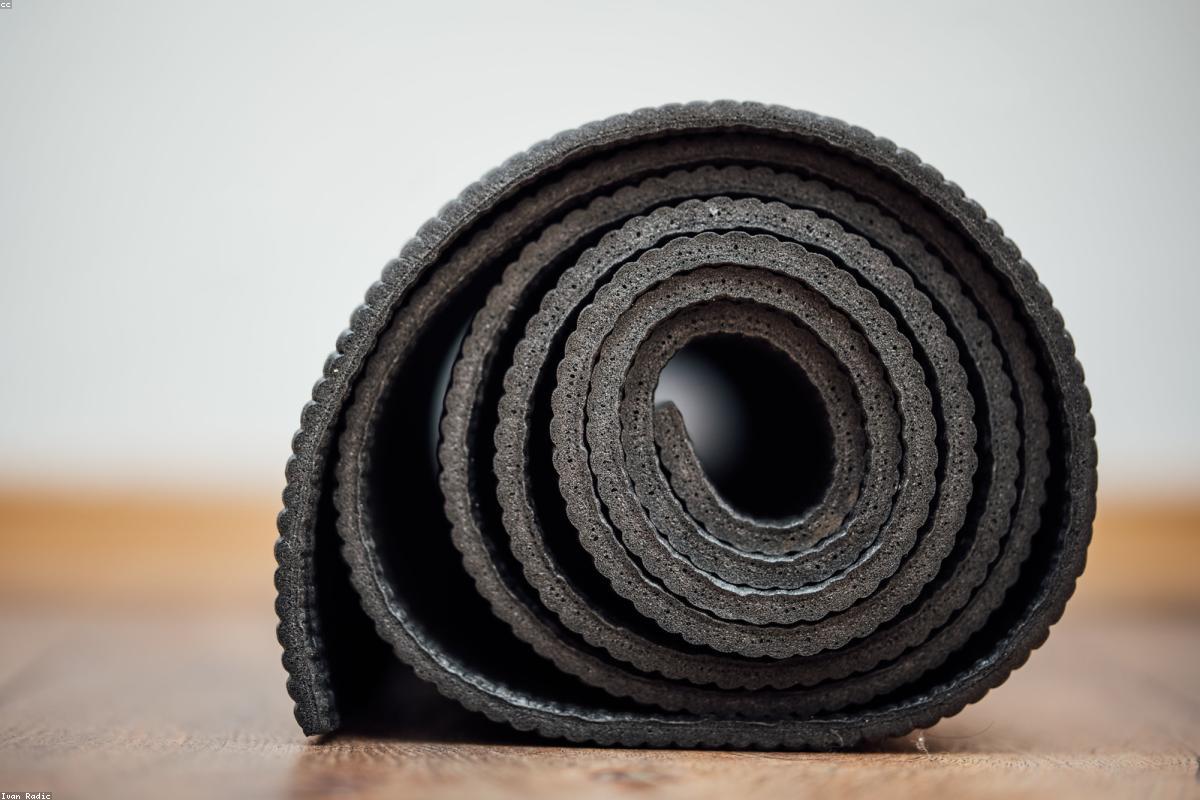
· by Jordan Reeves

Yoga Mat Density Explained: What Does It Matter?

Yoga mat density is the single most overlooked variable in mat selection, and I’ve watched it quietly ruin more yoga mat purchases than any other factor. When I first started practicing, I understood thickness intuitively — more millimeters meant more cushion, simple enough — but density was a black box that nobody seemed willing to open. I bought a 6mm mat that should have been perfect on paper and within two months it had compressed so dramatically under my regular use that it was functionally thinner than a 3mm studio rental mat. The problem wasn’t the thickness. The problem was density. And once I understood what density actually meant and how it affected every dimension of my practice experience, I never made a bad mat purchase again. In this article, I’m going to explain yoga mat density in the kind of practical, experience-backed detail that the industry seems determined to keep opaque — what density is, why it matters more than thickness in many situations, how to evaluate it in a store or online, and which density levels are right for which practice styles and body types.

What Is Yoga Mat Density, Actually?

Let me define density in the simplest possible terms because the yoga industry loves to throw around technical-sounding phrases without defining them. Density is how much material is packed into a given volume of the mat. A high-density mat contains more material mass per cubic centimeter. A low-density mat contains less material mass in that same volume. Think of the difference between a firm foam yoga block and a squishy foam pillow — same general category of material, radically different density, radically different behavior under load.

Density determines how much a mat compresses when you put your body weight on it. This is the property that actually matters to your practice, far more than the millimeter number printed on the label. A high-density mat resists compression — it stays close to its stated thickness even with your full body weight pressing into it during downward dog, tabletop, or a seated forward fold. A low-density mat compresses significantly — it might lose 40% to 60% of its stated thickness the moment you put weight on it, leaving you with far less functional cushioning than the spec sheet promised.

This compression behavior affects everything: how cushioned your joints feel during floor poses, how stable your standing foot is during balance work, how much proprioceptive feedback you get from the floor, and how long the mat maintains its structural integrity before breaking down. A mat that starts at 6mm but compresses to 3mm under load is effectively a 3mm mat that’s heavier and harder to carry. You paid for 6mm but you’re practicing on 3mm, and that’s the density trap in a nutshell.

The Density Spectrum by Material

Every yoga mat material has a natural density range, and understanding these ranges will help you narrow your options before you even start shopping.

PVC — High Density (and the Manduka PRO standard): High-quality PVC mats, with the Manduka PRO as the definitive reference point, sit at the top of the density spectrum. These mats are dense, heavy, and structurally resistant to compression. When I press my thumb into my Manduka PRO, I get almost no visible indentation — the material pushes back firmly and immediately. Under full body weight in tabletop position, a 6mm Manduka PRO might compress to roughly 5.5mm, retaining nearly all of its stated thickness as usable cushioning. This high density is why the Manduka PRO is famously supportive for joint-sensitive practitioners despite being “only” 6mm — it’s dense, so those 6mm are actual, functional 6mm rather than theoretical ones. The trade-off is weight: high-density PVC mats are heavy because density and weight are directly correlated. My Manduka PRO weighs about 7.5 pounds, and I feel every one of them when I carry it.

Natural Rubber — Medium-High Density: Natural rubber mats from brands like Jade, Liforme, and B Mat sit in the medium-high density range. They’re noticeably less dense than premium PVC — you can feel the difference immediately when you press into them — but they’re substantially denser than foam-based mats. A quality 5mm natural rubber mat might compress to about 4mm under body weight, giving you roughly 80% effective cushioning from the stated thickness. The rubber’s natural elasticity provides a subtle responsive bounce that some practitioners prefer — there’s a slight give-and-return sensation that PVC doesn’t offer. Natural rubber’s density also contributes to its excellent grip performance because the material resists deformation under shear forces, keeping your hands and feet planted during transitions.

TPE — Low to Medium Density: Thermoplastic elastomer mats sit in the low-to-medium density range, and this is where density starts to become a meaningful concern. TPE is lighter and softer than PVC or natural rubber, which makes TPE mats appealing for portability — they typically weigh 2 to 3.5 pounds — but that lightness comes directly from lower density. A 6mm TPE mat can compress to 3.5mm or even less under body weight, particularly in high-pressure zones like knees and sitting bones. Over time, TPE mats tend to develop permanent compression channels where you repeatedly place your hands and feet, essentially creating thin spots in the mat that never fully rebound. If longevity and consistent support are your priorities, TPE’s density profile will eventually let you down.

Cork — Very High Density: Cork mats represent the extreme high end of the density spectrum alongside premium PVC. Cork is naturally dense and structurally rigid — it barely compresses at all under typical body weight. A 4mm cork mat remains effectively 4mm regardless of how much weight you put on it because the material’s cellular structure resists compression almost entirely. This makes cork mats exceptionally stable for standing poses and arm balances — there’s zero surface instability — but it also means they provide minimal dynamic cushioning. Cork doesn’t absorb impact; it resists it. For practitioners who want uncompromising ground connection and don’t need much joint cushioning, cork’s extreme density is a feature. For anyone with joint sensitivity, it can be punishing.

NBR Foam — Very Low Density: Nitrile butadiene rubber foam mats occupy the bottom of the density spectrum. These are the thick, pillowy mats you often see marketed as “extra thick yoga mats” at budget price points — 10mm, 12mm, sometimes 15mm of foam. They’re extremely low density by design because the air pockets within the foam structure are what provide the soft, squishy feel. A 10mm NBR foam mat might compress to 4mm or less under body weight — that’s a 60% compression rate — meaning you need dramatically more stated thickness to achieve the same effective cushioning as a denser mat. NBR mats also degrade fastest because their low-density foam structure breaks down under repeated compression, developing permanent indentations and thinning over time. They’re comfortable on day one and disappointing by month six, and that trajectory is entirely a function of density.

Why Density Matters More Than Thickness in Most Situations

I want to make a statement that might sound controversial if you’ve been reading standard yoga mat buying guides: for the majority of practitioners, density is more important than thickness. Here’s why.

Thickness tells you the mat’s height before you put any weight on it. Density tells you the mat’s height after you put your body on it. The second number is the one that actually affects your practice. A 6mm low-density mat that compresses to 3mm under your knees offers less genuine joint protection than a 4mm high-density mat that stays at 3.8mm under the same load. The thinner high-density mat is actually providing more cushioning where it counts, and it’s doing so at a lighter weight and with better stability because there’s less material mass to compress and rebound.

This dynamic explains one of the most common complaints I hear from new practitioners: “I bought a thick mat because I wanted cushion for my knees, but it feels squishy and unstable and my knees still hurt.” What happened is they bought thickness without density. The 10mm foam mat they purchased compresses so much under their body weight that the effective cushioning is barely better than a dense 5mm mat, but the thick low-density material creates the unstable, wobbly surface that makes balance poses difficult. They got the worst of both worlds — instability without meaningful cushioning — because they optimized for the wrong variable.

Density also determines mat longevity in a way that thickness doesn’t. High-density materials resist permanent deformation better than low-density materials because there’s simply more material structure to maintain. My Manduka PRO at 6mm has held its shape for years of regular practice — the area under my hands and feet where I plant most frequently still feels identical to the edges of the mat that see almost no pressure. A low-density mat of the same thickness would have developed permanent thin spots in those high-pressure zones within months. When I talk to practitioners who say their mat “wore out” after six months or a year, what they’re almost always describing is low-density material breakdown rather than surface wear. The mat didn’t get torn or damaged — it got compressed and never rebounded. The yoga mat buying guide emphasizes density as a primary selection criterion for exactly this reason.

The Density Test — How to Evaluate Any Mat

You don’t need lab equipment to evaluate mat density. You need your thumb and a few seconds of attention. Here’s my personal density evaluation protocol that I use every time I’m in a store testing a mat I haven’t tried before.

The thumb press test: Place the mat on a hard, flat surface. Press your thumb firmly into the mat with moderate pressure — about the amount of force you’d use to press a doorbell. Observe what happens. If your thumb barely makes a visible indentation, if the material pushes back against your thumb firmly and immediately, you’re holding a high-density mat. This mat will maintain most of its stated thickness under body weight and provide stable support.

If your thumb sinks in noticeably — you can see a visible depression forming around your thumb — and the material feels soft and yielding rather than resistant, you’re holding a medium-to-low-density mat. This mat will compress under body weight, and you should factor that compression into your thickness calculation. A medium-density mat at 6mm might be perfectly adequate. A low-density mat at 6mm might not be.

If your thumb sinks in deeply and the material feels pillowy, almost spongy, and the depression lingers for a second or two after you remove your thumb, you’re holding a very low-density mat. This material will compress dramatically under body weight, provide unstable standing support, and likely degrade noticeably within months of regular use. Buy this mat only if you’ve made a conscious, informed decision that low density serves your specific use case — such as gentle floor-only practice where stability doesn’t matter and you’re comfortable replacing the mat frequently.

The standing compression test: If you’re in a store and it’s feasible, actually stand on the mat with bare feet and shift your weight between your feet. Feel what happens under your standing foot. Does the mat compress and shift? Is there a perceptible sinking sensation? Can you feel the material rebounding when you lift one foot? High-density mats feel planted and stable — you feel the floor through a firm layer. Low-density mats feel squishy and shifting — you feel the material moving beneath you. This standing test tells you more about how the mat will perform during your actual practice than any spec sheet ever will.

The knee test: If you’re comfortable doing so in a store, come to a tabletop position on the mat and place your weight through one knee. Feel how much of your kneecap is contacting the floor through the mat. High-density mats will feel firm but supportive — you’ll feel pressure but not sharpness. Low-density mats might feel soft initially but then “bottom out” as the material fully compresses, at which point you’re essentially feeling the floor directly through a thin layer of compressed material. This bottoming-out sensation is the density failure mode — the mat’s cushioning ran out before your joint protection needs were met.

These are the same tests I use when evaluating mats for the best thick yoga mat for comfort and joint protection recommendations, and they’re more reliable than reading spec sheets because they measure what actually matters — how the mat behaves under load — rather than what the manufacturer claims on paper.

Density Recommendations by Practice Style

Your practice style dictates where on the density spectrum you should be looking, and these recommendations come from years of matching specific mats to specific practice demands.

Standing poses, balance work, arm balances, inversions — maximum stability required: High density, without question. You need a surface that does not compress, does not shift, does not micro-move under your feet or hands during precise balance work. High-density PVC like the Manduka PRO, dense cork, or firm natural rubber mats in the upper end of the rubber density spectrum. When I’m working on handstand progressions, I want my mat to feel like the floor, not like a mattress — because when my hands micro-sink into a soft surface during an inversion, my entire proprioceptive map gets thrown off and my balance suffers. The American Council on Exercise notes that unstable surfaces reduce force output and balance accuracy during standing exercises, as stabilizing muscles must divert energy to surface compensation rather than the primary movement — and a low-density yoga mat functions as precisely that kind of unstable surface during standing and balancing postures.

Restorative, yin, gentle yoga — floor comfort priority: Lower density is acceptable and even desirable here because stability in standing poses is not a concern and maximum surface comfort during long-held floor poses is the primary objective. Lower-density mats provide a softer, more forgiving surface that distributes pressure more broadly across contact points during sustained kneeling and seated positions. A medium-to-low-density mat at 6mm to 10mm can provide excellent comfort for floor-dominant practice, and the stability trade-off is irrelevant because you’re not doing standing balance work. NBR foam mats at 10mm-plus are actually a reasonable choice for dedicated restorative practitioners, with the caveat that lower density means faster degradation and you’ll likely need to replace the mat more frequently.

Mixed practice — a bit of everything: Medium-high density natural rubber or dense PVC. This is the broadest category and the one most practitioners fall into. You need enough density to maintain stability during your standing and balancing work, enough compliance to provide joint comfort during your floor work, and enough structural integrity to hold up over months and years of varied use. Natural rubber in the 4mm to 5mm range from a quality manufacturer hits this balance well. Dense PVC at 5mm to 6mm also excels here. The yoga mat material comparison breaks down exactly which materials deliver which density profiles in this middle ground.

Hot yoga: Medium-high density with a grippy surface. The heat and moisture of a hot yoga environment don’t directly change density requirements, but they do change how density interacts with grip. Low-density mats absorb more moisture and can become slippery more quickly because the material’s air pockets fill with sweat. High-density mats with closed-cell construction resist moisture penetration and maintain grip better through a heated class. Natural rubber and closed-cell PVC at medium-high density are the hot yoga sweet spot.

Travel and portability — weight matters most: Lower density is, unfortunately, structurally linked to lower weight — you can’t have a heavy, dense mat that’s also light enough to carry indefinitely. TPE and low-density rubber mats weigh significantly less than dense PVC or cork mats of the same dimensions. If portability is your primary concern, accept that you’re trading density and longevity for weight savings. Buy a lighter, lower-density mat, understand that it will compress more under your body and degrade faster than a dense mat would, and plan to replace it on a shorter timeline. The trade-off is conscious and legitimate — just don’t expect dense-mat performance from a lightweight mat. They’re engineered for different priorities.

Body Weight, Density, and the Compression Equation

Your body weight directly modulates how much a given mat density compresses during practice, and this interaction is invisible if you’re not thinking about it explicitly. A 130-pound practitioner applying pressure through their knee in tabletop position generates significantly less compressive force than a 220-pound practitioner in the same position. The lighter person’s mat compresses less. The heavier person’s mat compresses more. Same mat, same density, different effective cushioning based on the person using it.

This means body weight should be part of your density calculation. If you’re on the lighter end, you can get away with medium-density mats that would compress too much under a heavier practitioner. A medium-density rubber mat at 5mm might retain 4.5mm of usable thickness under a 130-pound user — excellent performance. Under a 210-pound user, that same mat might compress to 3.5mm — adequate but not ideal, and potentially insufficient for joint-sensitive floor work. Heavier practitioners should strongly consider sizing up in both thickness and density, moving toward dense PVC or natural rubber options that resist compression across their entire contact surface. The best yoga mat for home practice guide accounts for this body weight interaction in its recommendations, and it’s a factor that I believe should be standard in every mat-buying guide.

Density and Mat Longevity — What to Expect Over Time

All mats degrade. The question is how fast, and the answer is almost entirely a function of density. High-density materials maintain their structural integrity longer because there’s more material mass to distribute compressive forces across and less air space within the material to permanently collapse. Low-density materials break down faster because the air pockets and open-cell structures that make them soft and lightweight also make them vulnerable to permanent deformation under repeated compression.

A high-density PVC mat like the Manduka PRO is famously durable — practitioners report using the same mat for five, eight, even ten-plus years with no meaningful loss of supportive properties. The material simply doesn’t compress enough under typical use to cause permanent structural change. A low-density NBR foam mat at 10mm might lose 50% of its cushioning performance within a year of regular use, developing permanent compressed channels where your hands and feet repeatedly press during downward dog and chaturanga. A medium-density TPE mat falls somewhere in the middle — a couple of years of regular use before compression channels become noticeable and supportive performance degrades detectably.

Longevity isn’t just about saving money on replacements, though that matters. It’s about consistency of practice experience. If your mat’s cushioning degrades gradually over time, you might not notice the incremental change until one day your knees hurt during tabletop and you can’t figure out why — the mat that supported you perfectly six months ago has slowly lost its effective cushioning, and you didn’t register the loss because it happened in fractions of a millimeter per month. High-density mats maintain a more consistent practice experience over their lifespan, which is valuable beyond the simple question of replacement cost. A study published in the Journal of Bodywork and Movement Therapies examined the mechanical properties of yoga mats and found that material density correlated directly with compressive fatigue resistance — the ability of the mat to maintain its cushioning properties under repeated loading cycles — with higher-density closed-cell materials significantly outperforming lower-density open-cell alternatives over simulated use cycles. In plain language: dense mats hold up. Cheap mats don’t. The research backs what experience tells you.

The Price-Density Relationship — What You’re Actually Paying For

There’s a reason high-density mats cost more than low-density mats, and it’s not just brand markup. Higher density means more raw material mass per mat, which means higher manufacturing material costs. It means tighter quality control to ensure consistent density across the entire mat surface rather than thin spots or inconsistent compression behavior. It means engineered material formulations — the specific PVC compounds, rubber blends, and manufacturing processes that produce high-density results — rather than off-the-shelf commodity foam.

When I see a $25 yoga mat advertised at 6mm thickness, I know, with near certainty, that it’s low-density foam that will compress to an effective 3mm within the first month of use and develop permanent thin spots within the first year. The manufacturing economics simply don’t support producing a high-density 6mm mat at that price point — the material costs alone would exceed the retail price. When I see a Manduka PRO at $120 to $140, the price reflects the high-density PVC compound, the manufacturing process that ensures consistent density across the mat’s full surface area, and the longevity that results from both. You’re paying for material mass and manufacturing precision, and the performance difference over time more than justifies the price difference for anyone who practices regularly.

This doesn’t mean you need to spend $120-plus on a mat. Cheap, low-density mats have legitimate use cases — home practice on carpet where the floor provides cushioning and the mat just needs to provide grip, occasional practice where longevity matters less, restorative-only practice on already soft surfaces. The point is to understand what you’re buying and calibrate your expectations accordingly. A $25 mat isn’t a worse version of a $120 mat — it’s an entirely different product in terms of density, performance, and lifespan, and it’s designed for different use cases.

My Personal Density Journey and Recommendations

When I started practicing yoga, I bought mats based on thickness and price, because those were the only variables I understood. Thicker looked more comfortable. Cheaper felt like better value. Every single mat I bought with that logic disappointed me within months. The foam mats compressed into lumps. The thick budget mats destabilized my standing poses while somehow also failing to cushion my knees properly — the worst of both worlds, which I now understand was the classic low-density failure pattern.

The turning point was the first time I practiced on a friend’s well-worn Manduka PRO. It was firmer than any mat I’d used — almost uncomfortably firm for the first five minutes, because I was conditioned to associate softness with quality. But by the end of the practice, my knees didn’t hurt, my standing balances felt more stable than they’d been in months, and I realized that what I’d been interpreting as “comfort” in soft mats was actually just material sloppiness — the mat giving way under my weight in ways that felt pleasant initially but undermined both my stability and my joint protection.

Today, I practice on a high-density 6mm PVC mat for my daily home practice on hardwood. It’s heavy, it’s firm, and it’s the most reliable piece of equipment I own. I carry a medium-density 5mm natural rubber mat to studio classes where the sprung floor provides additional cushioning and I want the lighter weight on my commute. For travel, I use a 1.5mm mat and accept the density trade-off as part of the portability package. I no longer buy low-density mats because my practice doesn’t align with their use cases — I need stability for standing work and longevity for daily use, and low-density materials deliver neither. For the dedicated knee-pain piece of this puzzle, the yoga mat knee pain what to look for article goes into specific density recommendations for joint-sensitive practitioners.

The single piece of advice I’d give to anyone shopping for a mat: prioritize density over thickness. A dense 4mm mat will serve you better and longer than a fluffy 10mm foam mat. Test density with your thumb and your body weight, not with the spec sheet. And understand that density costs money because it costs manufacturers more to produce — but that cost buys you years of consistent, reliable performance rather than months of gradual degradation. Browse density-focused mat options on Amazon here, paying close attention to material type and user reviews that mention compression behavior over time — those reviews will tell you more about real-world density than any product description ever will.


Why Trust Us

Every mat we recommend has been personally tested by our team. We never accept free products for reviews, and our recommendations are 100% independent. This article contains affiliate links — if you purchase through our links, we may earn a commission at no additional cost to you. Learn more.