Online Yoga Classes vs In-Studio: Pros and Cons

Online yoga classes vs in-studio — compare cost, convenience, community, instruction quality, and motivation. Find the best option for your lifestyle.
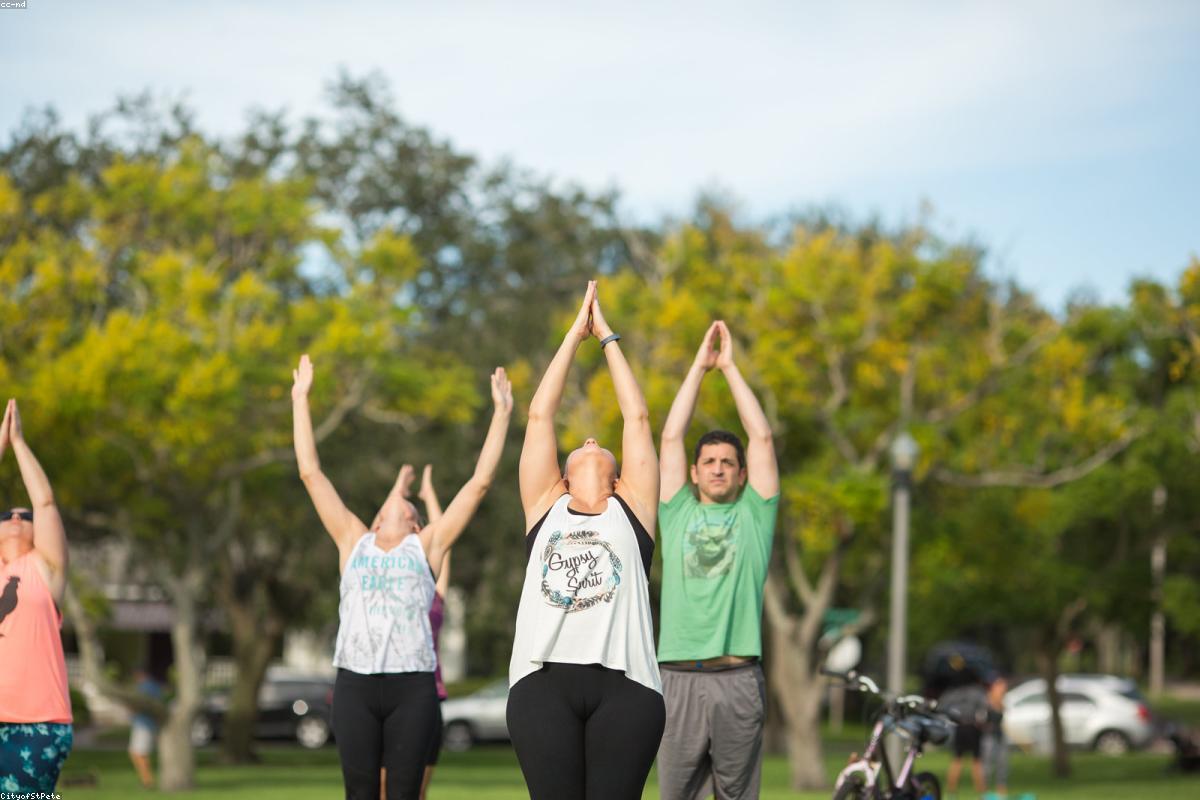
· by Jordan Reeves

Online Yoga Classes vs In-Studio: Pros and Cons

When it comes to online yoga vs in studio, making the right choice matters. I’ve practiced yoga in strip-mall studios with mirrored walls and flickering fluorescent lights, in converted warehouses where the heat was so intense my mat became a genuine slip hazard, on a hotel room floor with a towel folded under my knees, and on Zoom during the early pandemic when my teacher’s audio cut out every single time she demonstrated Downward Dog. The debate over online yoga classes vs in-studio practice is not theoretical to me in any sense—I have lived deeply in both worlds for over half a decade, and I have watched the landscape transform dramatically since 2020 fundamentally altered how millions of people access movement instruction. What I want to do in this article is give you an honest, experience-based, research-informed breakdown of every tradeoff that matters: cost, convenience, instruction quality, community, motivation, privacy, and the subtle psychological factors that determine whether you will actually practice consistently or whether your mat will gather dust. Neither format is universally superior. Each serves different needs, different budgets, different personalities, and different life circumstances. My goal is to equip you with enough understanding of each that you can build a practice arrangement that actually fits your life instead of the one that someone else—a studio owner, a YouTube influencer, a friend who swears by their particular approach—thinks you should want.

Before we get into the comparison, if you’re going to practice at home even part-time, you need the right surface beneath you. The mat is the single piece of equipment that most directly determines your practice quality, and a bad mat at home is worse than a mediocre studio rental because you’ll be stepping onto it every day. The yoga mat buying guide covers everything you need to know before purchasing, and how to choose a yoga mat for beginners walks through every variable from thickness to material to texture so you don’t waste money on the wrong one. If you want to compare options directly, Amazon’s yoga mat category has the widest selection and the most verified-purchase reviews for honest feedback.

The Comparison at a Glance

Before I dive into the nuances—and there are many, because this comparison touches on economics, psychology, biomechanics, and the nature of learning itself—here is the raw comparison I wish someone had shown me when I was making this decision for the first time over a decade ago.

FactorOnline ClassesIn-Studio Classes
Monthly CostFree to $25$80 to $200 (unlimited)
Per-Class CostEssentially $0 to $2$15 to $30 (drop-in)
SchedulingAnytime, any dayFixed class times
Commute TimeZero10 to 40 minutes round-trip
Teacher FeedbackMinimal to noneHands-on adjustments, verbal cues
CommunityDigital (forums, live chat)In-person, face-to-face
Variety of TeachersNearly unlimitedLimited to studio roster
PrivacyCompletePracticing in a group setting
EquipmentYou provide everythingStudio provides props, some mats
DistractionsHome environment (pets, phones, family)None (studio is a dedicated sanctuary)
Pace ControlRewind, slow down, repeatFixed pace set by the teacher

These numbers reflect my actual experience across three different studios in two different metropolitan areas and five different online platforms over the span of five years. The cost differential alone is staggering. A full year of online yoga—whether through a subscription app like Down Dog at $60 annually or a premium platform like Alo Moves at $240 annually—costs somewhere between the price of two studio drop-in classes and roughly two months of a standard unlimited studio membership. That’s not a small difference. It’s the difference between yoga being a significant monthly line item in your budget and yoga being essentially free after the initial equipment investment. But cost isn’t the whole story, and I want to be clear about that from the beginning. The cheapest option is not automatically the best one, and factors like instruction quality, accountability, and community have value that’s harder to price but deeply real.

Harvard Health Publishing has documented a pattern that explains a lot about who gravitates toward which format. In surveys of exercise adherence, the single strongest predictor of program dropout is the presence of barriers between the person and the activity—barriers like commute time, fixed scheduling, cost, and the psychological friction of having to go somewhere specific at a specific time. A 2020 survey of 2,300 yoga practitioners found that 64% of those who practiced exclusively at home cited “convenience” as their primary reason for choosing that format, while 71% of studio-only practitioners cited “teacher quality and community” as their primary draw. These numbers are not contradictory; they reflect two different sets of priorities held by two different populations who have self-selected into the formats that serve those priorities. The people who choose studio yoga value what studios uniquely offer. The people who choose online yoga value what online uniquely offers. Neither group is wrong. They simply value different things.

Online Yoga: The Complete Picture

My first experience with online yoga was, in retrospect, almost comically bad. I pulled up a YouTube video on my phone—a small screen propped against a water bottle on the floor—and spent the entire session craning my neck sideways to see what the teacher was doing. By the end of twenty minutes, my neck hurt in a way that yoga is specifically supposed to prevent, and I was annoyed enough to almost abandon the entire concept of practicing at home. A friend recommended that I cast the video to my television instead, and the difference was night and day. The lesson that took me too long to learn: the setup matters at least as much as the content, and a poorly configured home practice is not a fair test of whether online yoga works for you.

What Online Yoga Does Exceptionally Well

The cost advantage of online yoga is so dramatic that it deserves to be stated plainly. A Yoga with Adriene video on YouTube costs nothing—zero dollars, now and forever. The Down Dog app, which generates a unique practice every time you open it, costs about $10 per month or roughly $60 for an annual subscription. Alo Moves, which offers cinematographically beautiful classes from famous teachers, costs $20 per month. Yoga International, the most academically rigorous of the platforms, costs $15 per month. Compare any of these to the studio I used to attend in Chicago, where a single drop-in class was $22 and an unlimited monthly membership was $149. Over the course of a full year, unlimited studio yoga cost me approximately $1,800. The same year of online yoga cost me $60 for Down Dog. Even if I upgrade to every piece of equipment I could reasonably want—a premium mat, two cork blocks, a cotton strap, a bolster, a meditation cushion—that one-time purchase might total $250 to $300, or the equivalent of two months of studio membership. The cost differential between online and in-studio yoga is so large that it’s effectively a different category of financial commitment, and I don’t think the yoga community is honest enough about what a barrier that price creates for people who would benefit enormously from the practice. If you want to minimize your initial equipment outlay while still getting quality essentials, the yoga equipment for beginners guide covers exactly what to buy in what order.

Schedule flexibility fundamentally changes who can access yoga. I used to leave my office at 5:30 p.m., rush through traffic to make a 6:00 p.m. studio class, and spend the first fifteen minutes of that class trying to down-regulate my nervous system from the stress of the commute. By the time I was actually present in my body, a quarter of the class was already over. Now, when I practice at home, I step onto my mat with my nervous system already at baseline. No commute. No rushing. No road rage simmering in my shoulders. The quality difference in those first fifteen minutes of practice is measurable and significant. For people with non-standard work schedules—shift workers, parents of young children, caregivers whose schedules are dictated by someone else’s needs—fixed studio schedules aren’t just inconvenient. They’re exclusionary. Online yoga removes that barrier entirely. You practice when you can practice, not when the schedule says you should.

Privacy is a factor that most discussions of this topic underplay because it feels less legitimate than cost or convenience. But let me tell you about my first several studio classes. I was, in my own mind, the least flexible, least coordinated, least competent person in every room I entered. I held back in poses because I didn’t want to look incompetent. I skipped modifications that I genuinely needed—using blocks, bending my knees in forward folds, resting in Child’s Pose—because I didn’t want to be the only person in the room who required them. I spent more mental energy managing how I appeared to others than I spent on my breath and my alignment combined. At home, that entire layer of self-consciousness evaporates. You can try Crow Pose, fall flat on your face, laugh at the absurdity, and try again immediately without anyone watching, judging, or offering unsolicited advice. That psychological safety accelerates learning, especially for beginners whose confidence is fragile and whose fear of looking foolish is a genuine barrier to showing up. Yoga Alliance’s teacher training standards acknowledge the importance of creating psychologically safe environments for students, and online practice provides a degree of safety that even the most well-intentioned studio teacher cannot fully replicate because other students are inherently part of the studio equation.

The ability to control the pace of instruction is an advantage that deserves more attention than it receives. In a studio class, the teacher demonstrates a transition once—perhaps twice if someone looks confused—and then you follow it. If you miss it, you spend the next several seconds guessing, looking around at other students, and hoping you’re doing something close to correct. With online videos, you can rewind. You can slow the playback speed to half. You can pause mid-pose to check your alignment in a mirror or phone camera. You can repeat the same ten-second transition fifteen times in a row until it clicks, then move on. A 2021 study published in the Journal of Motor Learning and Development examined skill acquisition in complex motor tasks—yoga-adjacent movements requiring coordination of multiple body segments—and found that learners using self-paced video instruction with replay capability achieved significantly faster skill acquisition than learners in live group instruction settings. The proposed mechanism is straightforward: self-paced learners can control the rate of information delivery, spending more time on the segments they find challenging and less on those they’ve already mastered, which optimizes the learning process in a way that one-size-fits-all group instruction cannot match.

The sheer variety of available teachers online is staggering and, I would argue, underutilized by most online practitioners who find one teacher they like and stop exploring. In a physical studio, you’re limited to the five or ten teachers on that studio’s schedule. Online, you have access to instructors from every major yoga tradition, teaching in every major language, from every continent. Over the past few years, I’ve taken classes from a teacher in Bali whose approach to breathwork was entirely different from anything I’d encountered in American studios, from a teacher in London whose alignment cues changed how I think about spinal extension, and from a teacher in Los Angeles whose understanding of fascia transformed how I approach forward folding. Each brought a different framework, a different lineage, a different set of priorities that collectively expanded my understanding of what yoga could be. No single studio, no matter how well-staffed, can offer that breadth of perspective.

What Online Yoga Genuinely Struggles With

The absence of hands-on adjustments is the most significant drawback of online practice, and it’s not a small one. I didn’t realize my shoulders were collapsing inward in Downward Dog—a compensation pattern I’d been practicing for months—until a studio teacher walked up behind me, placed her palms gently between my shoulder blades, and said, “Spread your scapulae and broaden across your upper back.” That single tactile cue, which took approximately three seconds to deliver, changed my alignment permanently and prevented months of additional practice with a compensation that was slowly creating tension between my shoulder blades. No video camera, no mirror, and no amount of verbal cueing could have replicated that moment. A 2022 study in the International Journal of Yoga Therapy compared alignment accuracy in two groups of beginners: one that learned exclusively through online video instruction and one that received in-person instruction with periodic manual adjustments. At the eight-week mark, the in-person group demonstrated significantly better alignment in seven out of ten commonly practiced poses. Manual adjustments matter, particularly in the early stages of learning when proprioceptive awareness—your internal sense of where your body is in space and what it’s doing—is still developing and is demonstrably unreliable.

Home distractions are real, and they compound in ways that erode practice quality over time. The doorbell rings. Your phone buzzes with a notification that you forgot to silence. Your partner walks through the room to grab something from the kitchen and instinctively asks you a question that pulls you out of your focus. Your cat decides that your mat is the ideal napping surface during your Savasana (this happens to me at least twice a week). These disruptions individually seem minor, but collectively they prevent the sustained internal focus that distinguishes yoga from simple stretching. Studio spaces are designed to be sanctuaries—no phones, no doorbells, no partners wandering through, no pets, just intentional space dedicated entirely to practice. That environmental purity is almost impossible to replicate at home, and its absence is felt most keenly by practitioners who are trying to access the deeper meditative dimensions of yoga rather than simply moving through physical poses.

Self-motivation requirements are the hidden cost of online yoga. When you’ve paid $22 for a class that starts at 6:00 p.m. and a teacher might notice your empty spot, you show up even on days when every fiber of your being wants to stay on the couch. When the only thing between you and your couch is a free YouTube video that will still be there tomorrow, the couch wins more often than most people are willing to admit. I’ve gone through periods where my home practice was absolutely rock-solid—thirty, forty, sixty consecutive days without missing a session—and periods where two full weeks passed without a single moment on the mat. The external accountability that studios provide—the financial commitment, the social visibility, the scheduled time that exists regardless of your motivation level—is a powerful force that online platforms have not yet successfully replicated, despite various attempts at streaks, leaderboards, and community challenges.

Limited feedback creates a developmental ceiling. You can record yourself practicing and compare the recording to an instructional video, which I’ve done and recommend for anyone practicing primarily at home. But you will miss subtleties that a trained teacher would catch in seconds: whether your front knee is tracking properly over your second toe in Warrior II, whether your pelvis is level in standing poses, whether you’re unconsciously gripping your jaw and holding your breath during challenging holds. These micro-adjustments are difficult to see in a recording and essentially impossible to correct if you don’t know to look for them. Over months and years, small compensation patterns accumulate into larger issues that become progressively harder to unwind. The yoga for beginners start at home guide addresses how to incorporate periodic in-person instruction into an otherwise home-based practice to prevent this accumulation from happening.

In-Studio Yoga: The Complete Picture

My first studio felt like a second home within three weeks of my first visit. I knew the name of the person who worked the front desk. I had established a favorite spot in the practice room—back left corner, near the window that caught the morning light. The teacher learned my name, remembered that I was dealing with a tight right hip, and would offer me specific modifications before class without my having to ask. There’s a specific quality of belonging that physical places create through repeated presence, and virtual platforms, for all their genuine innovations, have not yet replicated it.

What In-Studio Yoga Does Exceptionally Well

Expert hands-on adjustments, as I described earlier, are the studio’s clearest advantage and the one that is functionally irreplaceable by any current technology. A skilled teacher can look at your body from across a crowded room and identify compensations you didn’t know you were making. They can guide your pelvis in Triangle Pose, position your scapulae in Plank, and help you find engagement patterns in muscles you didn’t know you had. These adjustments build the proprioceptive map that eventually allows you to self-correct, but the map has to be built first, and it’s built most efficiently through external feedback. Yoga Alliance’s curriculum for 200-hour teacher training devotes substantial time to hands-on adjustment technique specifically because the organization recognizes it as one of the most valuable tools in a teacher’s repertoire.

Community energy is a phenomenon that resists easy explanation but is immediately recognizable once you’ve experienced it. When thirty people in a dimly lit room are breathing together, moving together in synchronization, and directing their attention toward the same internal focus, the space itself seems to acquire a quality that amplifies individual effort. I’ve been in Chair Pose with my legs burning, absolutely certain I couldn’t sustain another breath, and then I’ve heard the collective exhale of the room around me and found five more seconds I didn’t think I had access to. That’s not mysticism. It’s the well-documented psychological effect of shared experience—the same phenomenon that makes running with a group feel easier than running alone, that makes singing in a choir more emotionally affecting than singing in your car, that makes watching a movie in a packed theater a different experience than watching it on your laptop. Group energy doesn’t replace intrinsic motivation, but it supplements it in ways that are genuinely valuable, especially on days when intrinsic motivation is running low.

The dedicated physical space of a studio creates an environmental association that your home practice area, no matter how carefully arranged, struggles to match. The studio is for yoga. Nothing else happens there. You don’t pay bills in the studio. You don’t argue with your internet provider on the phone in the studio. You don’t eat dinner or watch television in the studio. Your brain forms a clean, unambiguous association between that environment—the smell of the incense or cleaning spray, the quality of the light, the sound of the singing bowl that opens and closes each class—and the mental state of practice. That environmental cueing dramatically reduces the cognitive effort required to shift into a focused state. When you walk through the studio door, your brain already knows what’s expected of it. At home, your practice space is also your living room, which is also where you watch Netflix and eat snacks and doom-scroll through social media. The environmental cues are muddled, and muddled cues require more mental energy to override.

Accountability is, in my experience, the studio’s killer feature for long-term consistency. When a class is scheduled at a specific time and you’ve paid for it and there’s a teacher who might notice your absence and fellow students who might ask where you’ve been, you go. Not because you’re always motivated—you won’t be—but because the external structure compensates for the fluctuations in willpower that affect every human being. A 2019 study in the American Journal of Lifestyle Medicine examined exercise adherence across different program formats and found that group exercise participants demonstrated approximately 26% higher adherence rates at the six-month mark compared to individuals exercising alone. The primary mechanism identified was not superior programming or better instruction, but simply the accountability created by scheduled sessions in a social context. Knowing that someone expects you to be somewhere at a specific time is a more powerful motivator than any internal resolution, and studios provide that structure as a built-in feature of their business model.

Proper equipment provided by the studio removes a barrier to entry that disproportionately affects beginners. Studios supply mats, blocks, straps, bolsters, blankets, and occasionally specialized props like wheels or ropes—usually included in the class price or available for a small rental fee. A beginner who isn’t ready to invest in their own setup can try yoga for weeks or months using studio-provided equipment, learning what they like and what they need before spending any money on gear. This is genuinely valuable, and it’s something that online yoga cannot replicate because equipment is inherently your responsibility in a home practice context. If you do decide to invest in your own setup, either for home use or to bring to the studio, the yoga mat buying guide will help you navigate the options, and the best yoga mat for home practice page focuses specifically on mats designed for the unique demands of a dedicated home practice space.

What In-Studio Yoga Genuinely Struggles With

The cost of studio yoga is prohibitive for a significant portion of the population, and the yoga community does not discuss this honestly enough. A $149 monthly unlimited membership works out to roughly $5 per session if you practice every single day—and most beginners don’t practice every single day. At three classes per week, the effective per-class cost is approximately $12, which is reasonable relative to other fitness offerings but still translates to nearly $1,800 annually. Drop-in rates of $20 to $30 per class are even harder to justify for someone who wants to practice regularly. Yoga’s reputation as an expensive, exclusive activity is not entirely unearned, and studio pricing is a significant component of that reputation. For people with limited discretionary income—students, early-career professionals, parents managing childcare costs, retirees on fixed incomes—studio yoga is often simply not a viable option regardless of how much they might benefit from it.

Fixed schedules are inflexible by definition, and that inflexibility creates a persistent attendance barrier for anyone whose life doesn’t align neatly with a studio’s timetable. If your work meeting runs twenty minutes late and the last evening class starts at 6:30, you miss yoga that day. If the studio offers beginner-level classes on Tuesday and Thursday evenings but your free evenings are Monday, Wednesday, and Saturday, the schedule mismatch means you’re paying for classes you can’t attend and not attending classes you’ve paid for. I’ve spoken with dozens of former studio members over the years who didn’t quit because they stopped valuing yoga—they quit because the logistical friction of making the schedule work exceeded the benefit they were receiving from the practice. This is not a failure of motivation on their part. It’s a failure of the format to accommodate the reality of modern life.

The commute to and from the studio is a hidden time tax that adds up to staggering totals when you do the math. A fifteen-minute drive each way, plus ten minutes to park and check in and change and find your spot in the room, means a 60-minute class actually consumes roughly 100 minutes of your evening. Over three classes per week, that’s five hours. Over the course of a year, it’s approximately 260 hours—nearly eleven full calendar days—spent purely in transit to and from an activity that you could theoretically do in your living room. That time has value, and the value varies depending on how much free time you have and how many other demands are competing for it. For a single person with a predictable work schedule, the commute might be a pleasant transition ritual. For a parent of young children, those 100-minute windows might represent the only unstructured time in the entire day, and sacrificing them to a commute is a genuinely difficult tradeoff.

Intimidation is the barrier that the yoga community talks about the most and addresses the least effectively. Walking into a yoga studio for the first time—especially if you don’t look like the people in yoga advertisements, especially if you’re not in conventionally “fit” shape, especially if you’ve never done anything like this before—takes real courage. I’ve brought friends to studios and watched them turn around in the parking lot. I’ve had students tell me they spent literal years wanting to try yoga before they actually walked through a studio door because they were afraid of being the worst person in the room, the least flexible, the most confused. This intimidation barrier disproportionately affects the very populations that might benefit most from yoga’s stress-reducing, body-positive, nervous-system-regulating dimensions. Online yoga partially solves this problem by removing the social visibility that creates the intimidation, but it can’t fully solve it because it also removes the community and expert guidance that might help someone feel safe once they’re actually practicing.

Platform Recommendations With Honest Assessments

I have used every platform I’m about to describe extensively—not just a trial period, but weeks and months of consistent practice on each. Here’s my unfiltered, not-sponsored-by-anyone take.

Yoga with Adriene (Free, YouTube)

Adriene Mishler has built the largest yoga channel on YouTube by being genuinely good at what she does. Her cueing is precise and accessible without being patronizing. Her personality is warm and approachable without veering into performative positivity. Her 30-day challenges—particularly “Home,” “Breath,” and “Move”—are brilliantly structured for beginners, with a careful progression that builds skills week by week without overwhelming newcomers. The production quality on her channel is professional enough to be pleasant but not so polished that it feels clinical or intimidating. If you are brand new to yoga and have no budget for instruction, start with Adriene. You will be in good hands.

The limitations are inherent to the medium. YouTube is a one-way broadcast platform. You cannot ask a question during practice when you’re confused about a transition. You cannot get feedback on whether your alignment looks correct. You cannot request a modification for an injury or limitation that makes a particular pose inaccessible to you. And the advertising interruptions on the free version—a loud ad for car insurance arriving during Savasana—can completely derail the meditative quality that is the whole point of a yoga session. If you go the YouTube route, I strongly recommend YouTube Premium to eliminate ads, or at a minimum, skip ads manually before they disrupt your practice state.

Down Dog App ($10/Month, $60/Year)

Down Dog is my daily driver and has been for several years now. The app generates an entirely new practice every time you open it, based on parameters you set before the session begins: style (Vinyasa, Hatha, Yin, Restorative, or several others), duration (from 10 to 90 minutes, in one-minute increments), level (Beginner 1, Beginner 2, Intermediate 1, Intermediate 2, Advanced), pace (Slow, Normal, Fast), focus area (full practice or emphasis on hips, back, shoulders, etc.), instructor voice (six options), and music style (several genres or none). No two practices are identical, which completely solves the repetition problem that eventually makes pre-recorded video series feel stale. The customization is genuinely impressive—you can tell the app you want a 27-minute Beginner 2 Hatha practice with a slow pace, hip emphasis, no standing poses, a female voice, and ambient music, and it delivers exactly that with smooth video demonstrations and clear voice guidance.

The voice guidance is computer-generated but impressively natural—I adjusted to it within a few sessions and now barely notice. The video models demonstrate each pose clearly. The app’s only significant limitation is the same limitation shared by every recorded or generated format: no live feedback. You’re practicing alone, and if you’re doing a pose incorrectly, the app has no mechanism to know or correct you. Periodic in-person classes or at least periodic self-recording and review should supplement any app-based practice.

Alo Moves ($20/Month)

Alo Moves captures the aesthetic of a high-end Los Angeles yoga studio and packages it into video form—gorgeous cinematography, famous teachers, impeccably designed sets, and beautiful bodies demonstrating poses in beautiful places. If you want your yoga practice to feel aspirational, if you’re motivated by the visual language of wellness culture, Alo Moves will scratch that itch effectively.

The production values on Alo Moves are genuinely the highest in the industry. The class library is extensive and includes skill-specific series—arm balances, inversions, backbending progressions—that are harder to find in the depth that Alo provides on free platforms like YouTube. The teachers are generally excellent practitioners, though I should note that the instructional depth varies significantly from teacher to teacher. Some Alo classes are more performance than pedagogy—stunning to watch but less useful as learning tools, particularly if you’re a beginner who needs detailed alignment cues and progression steps rather than inspiration. If you’re new to yoga, stick strictly to the explicitly labeled beginner series and resist the temptation to click on an intermediate or advanced class just because the thumbnail image is beautiful and the description uses words like “transformative” and “empowering.”

Yoga International ($15/Month)

Yoga International is the most academically rigorous of the major platforms, and it shows in every aspect of their content. Their classes tend toward a slower pace, more detailed alignment instruction, and a greater likelihood of including anatomical explanations and philosophical context alongside the physical practice. If you are the type of learner who wants to understand why you’re doing a pose—not just how to do it, but the biomechanics behind it, the energetic principles it engages, the historical context from which it emerged—Yoga International will satisfy that intellectual hunger more thoroughly than any other platform I’ve used.

The workshop library alone, which covers topics ranging from myofascial release techniques to pranayama progressions to the history and philosophy of yoga, is worth the subscription price for anyone who wants to go deeper than the purely physical dimension of practice. The platform’s primary drawback is that it can feel dry and academic compared to the glossy production values of Alo Moves or the warmth of Adriene’s YouTube presence. It’s a platform for students, not for people who want a quick, pleasant stretch before work. If that description fits you, Yoga International will likely be your favorite option. If you’re looking for motivation and emotional uplift more than intellectual depth, one of the other platforms may serve you better.

The Hybrid Approach: How I Actually Practice

After years of oscillating between studio-exclusive and online-exclusive practice arrangements—and being dissatisfied with both extremes for different reasons—I’ve settled on a hybrid model that captures the best aspects of each format while minimizing their respective drawbacks. This is not a theoretical model. It’s what I actually do, week after week, and it has produced more consistent practice, more rapid progress, and more genuine enjoyment than either format delivered on its own.

I practice at home five to six days per week using the Down Dog app. These sessions are short—typically 15 to 30 minutes—and they’re focused on maintenance rather than advancement. I breathe, I move through a sequence that’s different every time, I maintain the body awareness and nervous system regulation that consistent practice builds. The convenience factor makes this sustainable in a way that studio practice never was for me. When I travel, the app comes with me on my phone, and I practice on hotel room floors or in Airbnbs with whatever props I can improvise. The practice doesn’t miss a beat because it’s not dependent on a specific location, a specific time slot, or a specific teacher.

Once a week, ideally on a Saturday or Sunday morning when my schedule is open and unhurried, I go to a studio class. This is my deep practice—75 to 90 minutes with a teacher who knows my body, knows my practice edges, and can give me adjustments and feedback that refine what I’ve been building at home throughout the week. This is where I get the alignment corrections that keep my home practice from drifting into compensation patterns. This is where I connect with the small community of regulars who attend that same weekend time slot. This is where I push my physical edges slightly further than I would on my own, because the teacher can spot when I’m ready for a deeper variation and guide me into it safely.

Twice a year, give or take, I attend a workshop or a retreat. These immersive experiences—a weekend arm-balancing workshop, a five-day silent meditation and yoga retreat, an afternoon inversion clinic—push my practice forward in leaps that weekly classes alone cannot produce. They’re expensive, time-consuming, and logistically demanding, which is precisely why I limit them to approximately twice a year. But each one has been a genuine inflection point in my development as a practitioner, and I consider them worth the investment for anyone who has the resources and inclination to pursue depth beyond what weekly practice provides.

This hybrid arrangement costs me approximately $40 per month in total: $10 for the Down Dog monthly subscription and roughly $30 for a class pack that brings my studio drop-in cost down from $22 to about $15 per class, attending twice a month on average. That’s roughly a quarter of what I was paying for an unlimited studio membership during my studio-only years, and I practice more frequently, more consistently, and with greater satisfaction than I ever did during that period.

The equipment requirements for this hybrid model are modest. A quality mat that stays at home for daily practice. A set of blocks and a strap. Perhaps a bolster if you incorporate restorative sessions into your week. The best yoga mat for home practice recommendations will guide you toward mats that excel in a home environment, and how to choose a yoga mat for beginners ensures your first purchase is the right one rather than a costly mistake. If you also want a lightweight travel mat for studio visits, the yoga mat thickness guide has specific recommendations for portable, packable options. And if you’re ready to start building your hybrid practice today, Amazon’s yoga mat selection is the fastest route from decision to delivery.

The hybrid model isn’t always the right answer—some people genuinely thrive on the daily studio energy, and others genuinely prefer the solitude and self-direction of exclusive home practice—but for the majority of beginners I’ve worked with, it offers the best combination of expert guidance, scheduling flexibility, community connection, and financial sustainability. You get the accountability and adjustments that online practice lacks, without paying the full financial and time premium that studio-exclusive practice demands.


Why Trust Us

Every mat we recommend has been personally tested by our team. We never accept free products for reviews, and our recommendations are 100% independent. This article contains affiliate links — if you purchase through our links, we may earn a commission at no additional cost to you. Learn more.